
Author: Azra
Funnel Strategy in Dubai: How to Turn Attention into Real Revenue
A funnel strategy in Dubai often fails not because of traffic, but because of structure. Most brands generate: However, revenue remains unstable. That’s because attention does not automatically convert into revenue—especially in Dubai’s premium attention economy. Designing an effective funnel strategy in Dubai requires a deeper understanding of: As a result, aggressive top-of-funnel scaling without a structured funnel only inflates CAC. Let’s break down how revenue-generating funnels actually work in this market. Why Funnel Strategy in Dubai Matters More Dubai is: This creates three structural realities: Without structured sequencing, traffic burns budget.A properly designed sales funnel UAE reduces friction at
Retention in Dubai: Why Most Brands Focus on the Wrong Metric
Customer retention in Dubai is rarely the starting point of growth discussions. When brands talk about growth in Dubai, the conversation usually revolves around: However, boardroom discussions rarely begin with retention. Here’s the structural reality: In a premium attention economy like Dubai, retention is not a backend metric. It is the growth stabilizer. If your customer retention strategy in Dubai is weak, acquisition will always feel expensive. If your retention is strong, CAC becomes manageable even in high-competition environments. Let’s break this down properly. Why Customer Retention in Dubai Matters More Dubai is a smaller market compared to India or
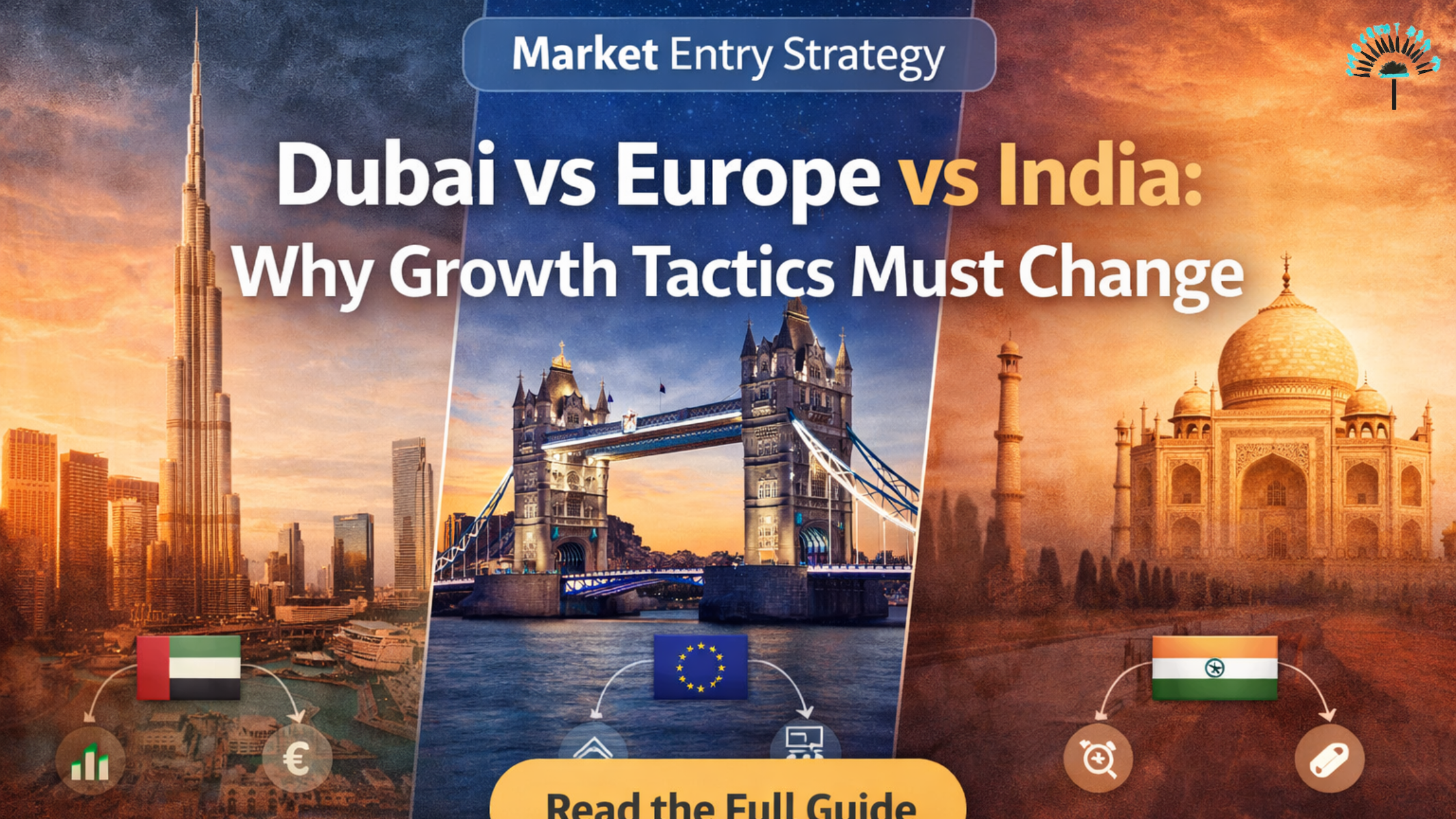
Dubai Market Entry Strategy: Why Growth Tactics Fail Across Markets
A Dubai market entry strategy is not a copy-paste exercise across regions. If you are planning expansion or comparing performance across markets, one question eventually surfaces: Why are the same growth tactics not working everywhere? What works in India does not automatically translate to Dubai.Similarly, strategies that perform in Europe often fail to adapt to the GCC. This is why a Dubai market entry strategy requires structural adaptation, not surface-level execution. Dubai is not simply a smaller version of a large country. Instead, it is a high-income, high-competition, premium-attention market shaped by unique behavioral and economic dynamics. As a result,
Startup Marketing Budget in Dubai: The Smart Way to Allocate Spend Better
A startup marketing budget in Dubai is one of the most critical decisions founders face. If you are a founder building in the UAE, you have likely asked: This is not a small-market question. It is a structural one. Because a startup marketing budget in Dubai behaves very differently from markets like India, Europe, or Southeast Asia. Dubai is: When allocation is unclear, CAC rises quickly.However, when a startup marketing budget in Dubai is structured correctly, the market becomes one of the most profitable environments for scaling. Let’s break this down at the boardroom level. Understanding Startup Marketing Budget in

EdTech Marketing in Dubai: Proven Strategy for High-Trust Markets
If you are building or scaling an education brand in the UAE, you already know one thing:EdTech marketing in Dubai is not traffic-driven. It is trust-driven. Parents, students, and working professionals in Dubai do not enroll impulsively. They evaluate, compare, and validate. Which means edtech marketing in Dubai requires a completely different funnel structure than ecommerce or SaaS. In this market, authority and credibility determine conversion stability. Understanding EdTech Marketing in Dubai Landscape Dubai’s education environment is unique for several reasons: According to KHDA (Knowledge and Human Development Authority) annual reports: This regulatory structure creates a high-expectation environment. In simple

E-commerce Marketing in Dubai: Proven Way to Fix Conversions
If you’re investing in e-commerce marketing in Dubai, you’ve probably experienced this: Traffic is steady. Add-to-carts are happening. Campaign metrics look fine. But revenue feels inconsistent. That’s when founders start searching for answers around e-commerce conversion in the UAE. Here’s the reality: Dubai is not a low-intent market. It is a high-evaluation market. Conversion does not drop because people are uninterested. It drops because trust, structure, and sequencing are misaligned.Let’s break down the real mechanics. Understanding E-commerce Marketing in Dubai Environment Before diagnosing conversion, understand the ecosystem. According to Statista, UAE eCommerce Outlook 2024: According to DataReportal UAE 2024: This

Fintech Marketing in Dubai: Why Trust Drives Better Growth
If you’re serious about fintech marketing in Dubai, you already understand something important: Traffic is easy. Trust is not. Dubai is one of the fastest-growing fintech ecosystems in the GCC. According to the UAE Central Bank Financial Stability Report (2023), digital financial services and fintech innovation continue to expand rapidly across the UAE, increasing both opportunity and competition. More fintech players entering the market means: In this environment, scaling without a trust architecture inflates cost.That’s why fintech customer acquisition in Dubai is less about traffic volume and more about credibility sequencing. Understanding Fintech Marketing in Dubai Landscape Dubai’s financial ecosystem
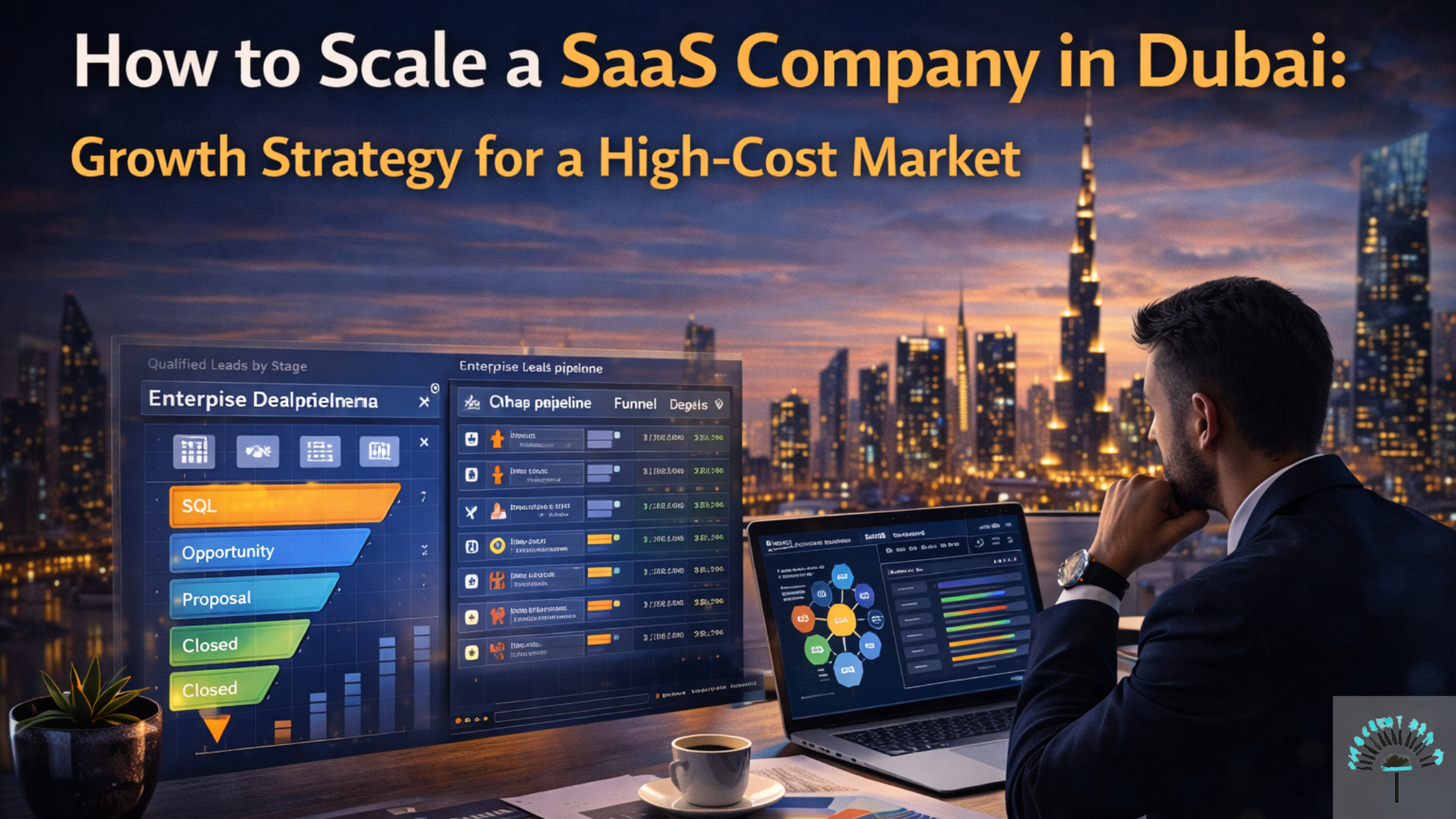
SaaS Marketing in Dubai: Proven Way to Scale Profitably
If you’re serious about SaaS marketing in Dubai, you already know one thing:Traffic isn’t the hard part. Qualified pipeline is. Dubai is one of the most opportunity-dense B2B markets in the GCC. It hosts regional headquarters, multinational operators, logistics hubs, fintech innovators, and high-growth SMEs. But it is also one of the most misunderstood SaaS acquisition environments. Scaling a SaaS company in Dubai requires: Without these, customer acquisition cost rises quickly. With them, Dubai becomes one of the most profitable high-value SaaS markets in the region. SaaS marketing in Dubai requires a different approach compared to global SaaS markets. Understanding

Scaling Business in Dubai: Why Smart Growth Beats More Spend
When founders search for a scaling business in Dubai, they’re not looking for motivation. They’re looking for control. Dubai is one of the most opportunity-dense markets in the GCC, but it’s also one of the fastest markets to punish inefficient scaling. Advertising is competitive. Buyers are sophisticated. Trust is a premium. Competition includes international brands. If you scale without structure here, CAC doesn’t just rise. It accelerates. The founders who win in Dubai do not scale faster. They scale smarter. The Structural Reality of Scaling Business in Dubai Before we talk tactics, understand the environment. Why Founders Struggle with Scaling